How I Turned a Migration Disaster Into 150% Traffic Growth?
A B2B SaaS company migrated from WordPress to HubSpot and unknowingly wiped out years of SEO equity in the process. I came in, fixed what broke, and turned organic into their top lead channel.
Resources
May 28, 2026
Author - Mohana J
The Problem:
A platform switch. An SEO collapse. A business with nowhere to go.
A B2B SaaS company had built steady organic traffic over time. Their content ranked well, their website generated qualified leads, and organic search had become an important acquisition channel.
Then they migrated from WordPress to HubSpot.
The move itself made sense. HubSpot offered better CRM integration, cleaner lead tracking, and a more scalable marketing setup. The problem wasn’t the platform decision. It was the migration execution.
By the time I joined the project, the impact was already visible. Organic traffic had stalled, demo requests had slowed dramatically, and pages that once ranked consistently were quietly disappearing from search results. The team knew something was wrong, but couldn’t pinpoint what caused the drop.
“We kept the same content. We just changed the platform. Why would SEO care about that?” - that’s the question I hear before almost every migration recovery project.
The answer is simple: Google doesn’t just evaluate content. It evaluates the entire structure around it including URLs, metadata, redirects, internal links, crawl paths, and the authority signals built over time.
When those elements break during a migration, rankings don’t disappear overnight because the content became bad. They disappear because search engines lose the signals that helped them trust and understand the site in the first place.
A website migration isn’t just a design or platform update. If handled incorrectly, it can quietly erase years of SEO momentum.
The Diagnosis:
What the migration actually broke and why nobody noticed until it was too late?
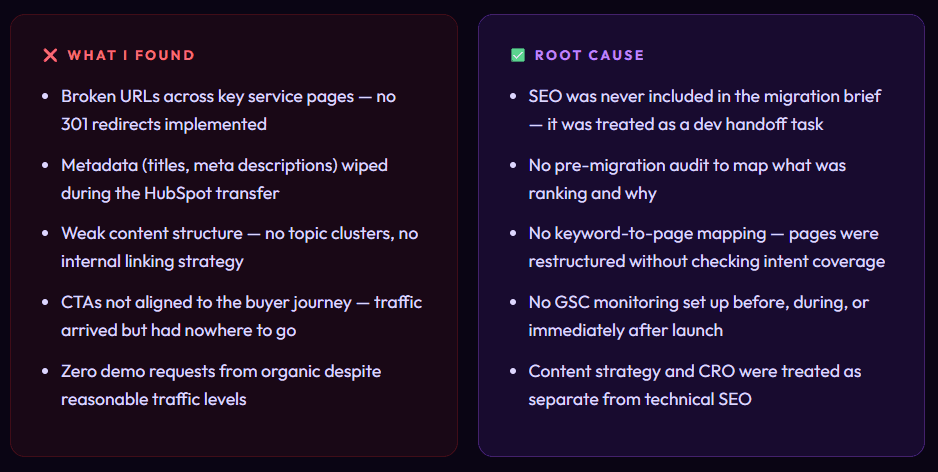
The core issue wasn’t the product or the content quality. It was the migration process itself.
SEO had been treated as a secondary consideration instead of a critical part of the transition. Key ranking signals were lost, technical foundations broke silently, and organic performance declined as a result.
What looked like a traffic problem on the surface was actually a structural SEO failure caused by the migration.
The Work:
What I actually did, step by step?
When I came in, I didn’t start with content. I started with the foundation. The technical SEO layer was blocking everything else from performing properly.
#1 Deep Technical SEO Audit
Performed a full technical crawl of the website to identify broken links, crawl errors, indexing issues, and structural SEO problems. Mapped every URL affected during the migration and identified pages with existing rankings or backlink authority that needed to be preserved.
#2 Migration Recovery & SEO Restoration
Implemented proper 301 redirects across all affected URLs and restored missing metadata, including page titles, meta descriptions, and social tags. Re-optimized pages based on keyword intent and search behavior rather than generic brand messaging.
#3 Sitemap Optimization & Search Console Recovery
Updated the XML sitemap to match the new site structure, removed outdated pages, and resubmitted the site through Google Search Console for faster reindexing. Set up ongoing monitoring to catch crawl or indexing issues early.
#4 Content Cluster Strategy
Built a topic cluster structure around high-intent search themes and buyer pain points. Each cluster supported a core commercial page with strategically linked supporting content designed to improve topical authority and organic visibility.
#5 Conversion-Focused CTA Optimization
Reworked the CTA strategy across key landing pages using intent-based calls to action tailored to different stages of the buyer journey. The focus shifted from passive engagement metrics to qualified lead generation and demo conversions.
The Outcome:
From broken migration to a high-performing organic channel
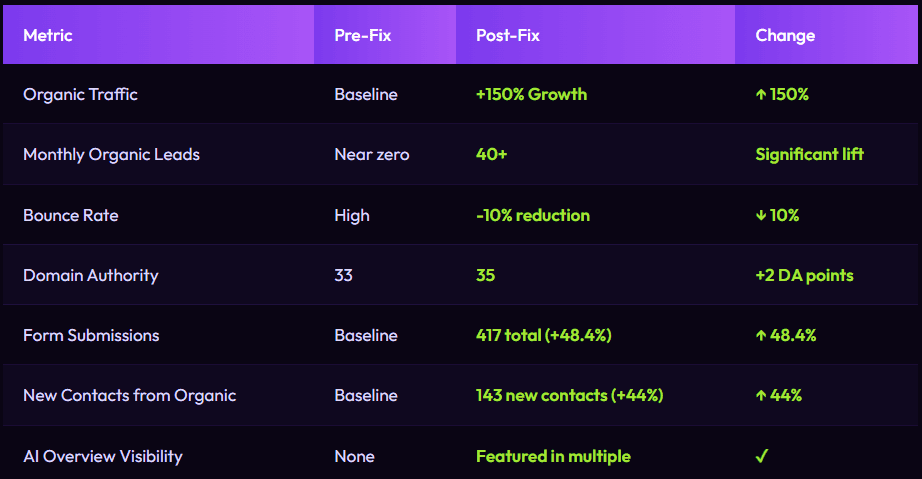
The results didn't come from tricks or hacks. They came from fixing what the migration broke, then building a content architecture that gave Google and buyers exactly what they were looking for.
The Insight:
What this case study actually proves?
This wasn’t a story about weak content or a poor product. The business already had strong foundations. What was missing was SEO involvement during the migration process. Critical ranking signals were lost because search visibility wasn’t considered early enough in the transition.
That’s where I come in.
My role goes beyond publishing content or fixing redirects. I work at the intersection of technical SEO, content strategy, and growth so that website decisions, content decisions, and business goals all support the same outcome: qualified organic traffic that converts.
“Website migration isn’t just a platform switch. It’s a transaction with Google. Every URL, headline, redirect, and page structure sends a signal. Treat it like one.”
A website migration is never just a platform change. Every URL update, structural edit, metadata change, and internal link adjustment sends signals to search engines. If those signals aren’t managed carefully, years of SEO equity can disappear quietly after launch.
Most businesses struggling with organic growth don’t lack effort. They lack SEO involvement at the right stage of decision-making. SEO is often brought in after development is complete and after traffic declines have already started showing up in Search Console.
This case study proves that when SEO is integrated into the process from the beginning, organic search can become one of the most reliable and scalable sources of qualified pipeline growth.
Your Buyers Are Searching, Will They Find You?
Let’s build a marketing strategy that drives visibility, trust and inbound leads.